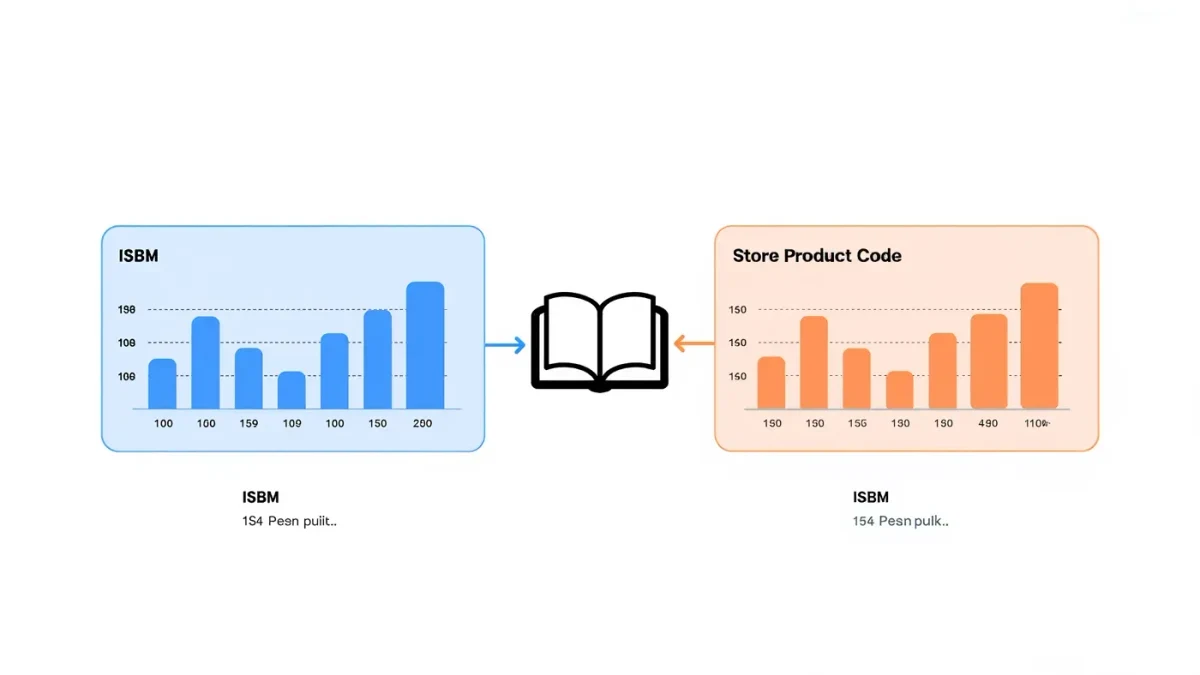
No, you don't need one. Amazon's Kindle store ignores ISBNs entirely and assigns every e-book its own ASIN, while Kobo, Apple, Google Play, and Barnes and Noble accept direct uploads without one, per their help pages as of late 2025 — ISBN for e-books is optional everywhere that matters, though buying one still pays in specific cases.
INKLESS BOOKS publishes information, not legal, financial, or professional advice.
What exactly is an ISBN, and who issues it?
An ISBN is a 13-digit product number that identifies one specific edition of a book — the EPUB of your novel, not the novel itself. Since 2007 every new ISBN has had 13 digits, and in the United States one company, Bowker, sells them through its myidentifiers.com store, per Bowker's FAQ. Other countries run their own registration agencies.
Think of it as a serial number for the supply chain. Bookstores, distributors, and library catalogs use it to order, shelve, and track the exact edition you published; industry sales statistics also key off it. What it does not do is establish ownership of your work — copyright is a separate system run by the U.S. Copyright Office, and registering there has nothing to do with buying an identifier. Some countries hand ISBNs out cheaply or free; Canadian publishers, for instance, get them at no charge from Library and Archives Canada. American self-publishers pay list price. It is a catalog number. Nothing more, nothing less.
Does Amazon require an ISBN for Kindle e-books?
No. The Kindle store runs on ASINs — Amazon's internal ten-character product codes — and every e-book uploaded through KDP gets one automatically. Per KDP's help pages, entering an ISBN during e-book upload is optional, and even then the ASIN stays the identifier that store links, reviews, and customer searches actually use.
That confuses newcomers, because KDP does advertise a free ISBN — but that offer applies to paperbacks, where Amazon registers a number on your behalf through its own account. For digital books there is simply nothing to enter. Publish the same title as an e-book and a paperback and you may end up with one ASIN plus one Amazon-provided print ISBN, and your own purchases on top if you want them. None of these numbers affect visibility inside the store; Amazon's search does not reward an ISBN the way a library catalog would.
What about Kobo, Apple, Google Play, and Barnes and Noble?
All four accept ISBN-free e-book uploads, per their publisher help pages as of late 2025. Each issues its own internal identifier instead, exactly as Amazon does. The catch sits one layer down: aggregators and library platforms often expect an ISBN, because their catalogs and purchasing systems are built around it.
So the real question is how you reach each store. Upload directly to Kobo Writing Life or Barnes and Noble Press and the free internal ID covers you. Route through a distributor like Draft2Digital and you can use the free ISBN it issues for the channels it manages — per Draft2Digital's help pages, that identifier stays valid on those channels. Libraries are the strictest audience: their catalogs descend from systems like the Library of Congress's publisher programs, which manage identifiers for books and serials, and most library vendors will not list a digital title that carries no number at all. For retail-only e-books, internal IDs cover you completely.
How much does an ISBN cost, and is it worth it for an e-book?
In the United States, Bowker charges $125 for one ISBN and $295 for a block of ten, per Bowker's pricing page as of late 2025 — prices that have held steady for years. Numbers never expire, and each format needs its own, so authors who buy at all almost always buy the block.
Whether that is worth it depends on your plans, not your genre. A $125 identifier on a $4.99 e-book has to be earned back somehow; on a paperback destined for library shelves it often pays for itself in ordering convenience. The free alternatives carry one real trade-off: when a platform issues the ISBN, that platform — not you — is listed as the publisher of record in the identifier database. No reader browsing a store page will notice. Institutions sometimes do.
| Option | Cost | Publisher of record | Best for |
|---|---|---|---|
| Buy your own from Bowker | $125 one, $295 ten | You | Print, libraries, your own imprint |
| Free ISBN from a distributor | $0 | The distributor | Wide e-book distribution on a budget |
| No ISBN, store ID only | $0 | Not applicable | Amazon-only or direct-upload e-books |
When can you confidently skip the ISBN?
Skip it when three things are true at once: you publish e-books only, you sell through retail channels that issue their own IDs, and you have no print, library, or imprint plans on the horizon. Plenty of Kindle-only novelists have never bought a single number and never missed it.
Buy, or at least budget for one, when any of these appear on your roadmap:
- A paperback or hardcover edition, where retailers and printers expect an ISBN.
- Library distribution, which practically requires a number.
- Your own imprint name — you want it listed as publisher of record.
- Sales reporting you need to tie together across multiple stores.
None of this is urgent on day one. You can publish the e-book now and add an ISBN to later editions or formats without breaking anything.
Frequently asked questions about ISBNs for e-books
Can I reuse one ISBN for my e-book and my paperback?
No. The ISBN identifies a specific format of a specific edition, so an EPUB, a paperback, and an audio edition of the same novel each take their own number. Reusing one across formats creates exactly the cataloging confusion the system exists to prevent, per Bowker's guidelines.
Does a free ISBN from a retailer or distributor belong to me?
No. Free identifiers are issued by the platform and registered to it as publisher of record, and they cannot be transferred to another service later. That is fine for most e-book authors, but it is the reason some self-publishers buy their own before distributing wide.
Do ISBNs ever expire?
No. Once assigned to your edition, an ISBN stays valid forever, including for out-of-print books — dead identifiers simply mark dead editions in the catalog. There are no annual fees to keep a Bowker-purchased number active, per Bowker's FAQ.
Will an ISBN improve my e-book's search ranking?
No. Store search engines rank on metadata, keywords, and sales behavior — not on which identifier a book carries. An ISBN helps institutions find and order your book; it does nothing for readers typing queries into a retailer's search bar.