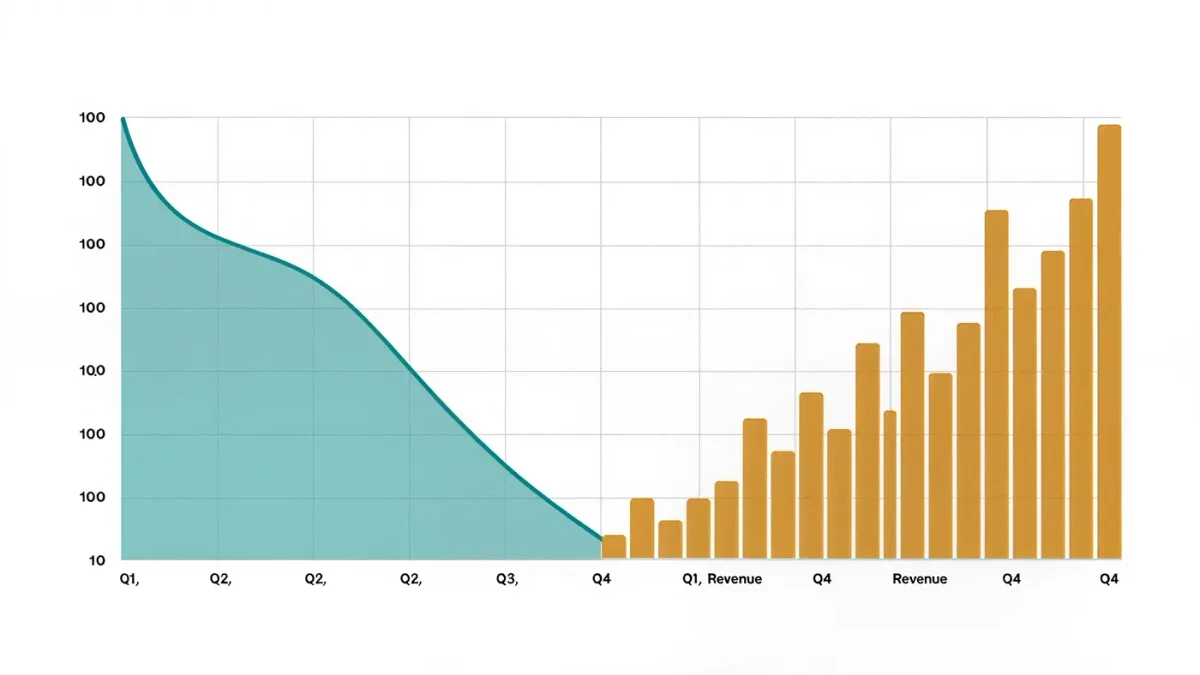
E-book revenue fell 5% to $261 million in the first quarter of 2026, per the AAP StatShot published in May 2026 at publishers.org. The industry overall was up 0.9%, digital audio jumped 15.9%, and trade sales held nearly flat — a format shuffle more than a reading slump.
The StatShot, published in May 2026 at publishers.org and covered by Publishing Perspectives, aggregates revenue from the association's reporting publishers. The shape of the quarter is familiar: trade nearly flat, e-books down, digital audio up double digits. Publishing's digital dollars are not disappearing; they are changing seats.
Audio has led industry growth for years now, so one soft e-book quarter fits a plateau narrative rather than a collapse. And for trade — the category readers actually browse — flat means stable, not shrinking. The number to watch is not the dip itself but what it does to publishers' format priorities.
What does the Q1 2026 e-book dip change for readers?
Not much on its own. One soft quarter does not reprice a catalog or kill a format, and the overall market barely moved. What it may nudge is attention: publishers keep steering investment toward digital audio, so expect more audio-first releases, subscription pushes, and slightly less promo energy behind e-book deals.
For indie authors, the practical read is steadier than the headline. E-books remain the format where self-publishing competes most directly with traditional houses, and a 5% quarterly revenue move among reporting publishers does not reorder that contest. What it does signal is where promotional muscle will flow: follow the 15.9%, and you find audio. The shift matches broader habits that Reuters tech and media coverage has tracked for years — screens to streams, reading to listening.
What did January's numbers show that the quarter hides?
The overlooked detail in the same AAP series: January 2026 e-book revenue was actually up 3.6% at $85.2 million, per publishers.org. That means the entire quarterly decline accumulated in February and March. One positive month, two softer ones — that is volatility, not a verdict. Quarterly readouts smooth over exactly the kind of swings that make foolhardy trendlines, so treat any single StatShot as a snapshot, not a trajectory.
Are ebooks in decline overall?
Not on the evidence of one quarter. The Q1 2026 StatShot shows e-book revenue down 5% to $261 million while the industry grew 0.9%, and January's e-book numbers were actually positive. A dip inside a growing market reads as format competition — audio absorbing digital dollars — more than readers abandoning ebooks.
Which format grew fastest in Q1 2026?
Digital audio, up 15.9% per the AAP StatShot published in May 2026. That continues the format's multi-year run as publishing's growth engine, driven by subscription apps and commuter listening habits. For readers it means more audio-first releases and bigger audiobook catalogs; for e-book fans it means the format war is increasingly a listening war.
Should indie authors worry about the e-book dip?
A 5% revenue dip among reporting publishers in one quarter is noise, not doom. E-books remain the most direct channel for indie sales, and nothing in the StatShot suggests format abandonment. The smarter response is watching promo pricing and audio sidelines: if listeners keep growing, producing audio editions of backlist titles matters more than panicking.