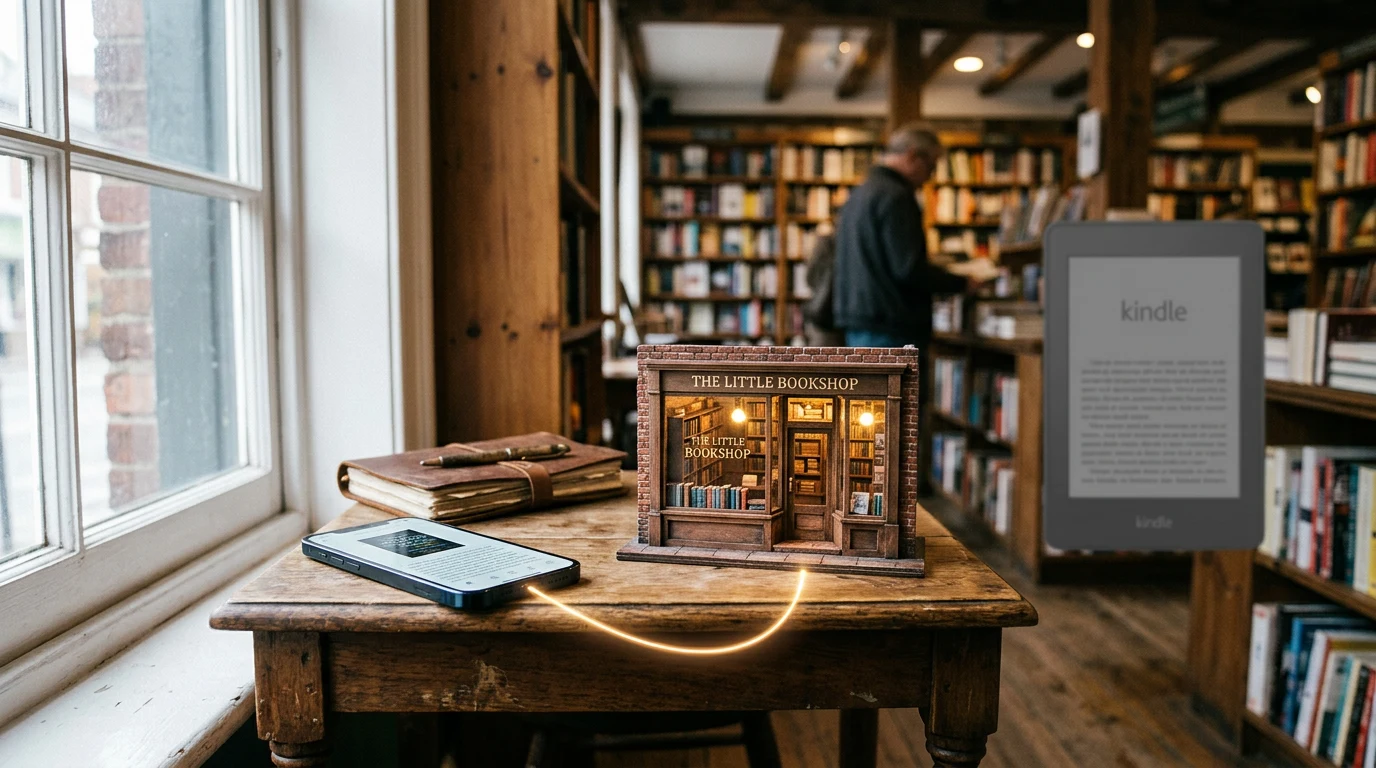
Amazon is opening the door to open formats. Starting January 20, 2026, readers will be able to download eligible Kindle purchases as DRM-free EPUB and PDF files, per Good e-Reader's report on the retailer's 2026 plan. Buyers of DRM-free titles can finally keep copies that work outside Amazon's ecosystem — a real change in what a digital library is worth.
INKLESS BOOKS publishes information, not legal advice. This story brushes against copyright law, and the rules around personally owned ebook files are genuinely knotty, so treat the legal notes below as a starting point rather than the final word.
Here is how it works. Verified purchasers will see download options for EPUB and PDF on Amazon's Manage Your Content and Devices page — but only for books the publisher or self-publishing author has flagged as DRM-free, the same setting KDP uploaders control, per Amazon's KDP documentation as reported in January 2026. Until now, Amazon's download-and-transfer option delivered files wrapped in Kindle DRM, which tied them to registered devices and apps.
What does DRM-free downloading change for readers?
Your eligible purchases stop being quietly conditional. A DRM-free EPUB can be backed up, copied to a Kobo or PocketBook, opened in any reading app, and read again in ten years even if your Amazon account is not. The catch: only DRM-free titles qualify, and most big-publisher ebooks are not DRM-free.
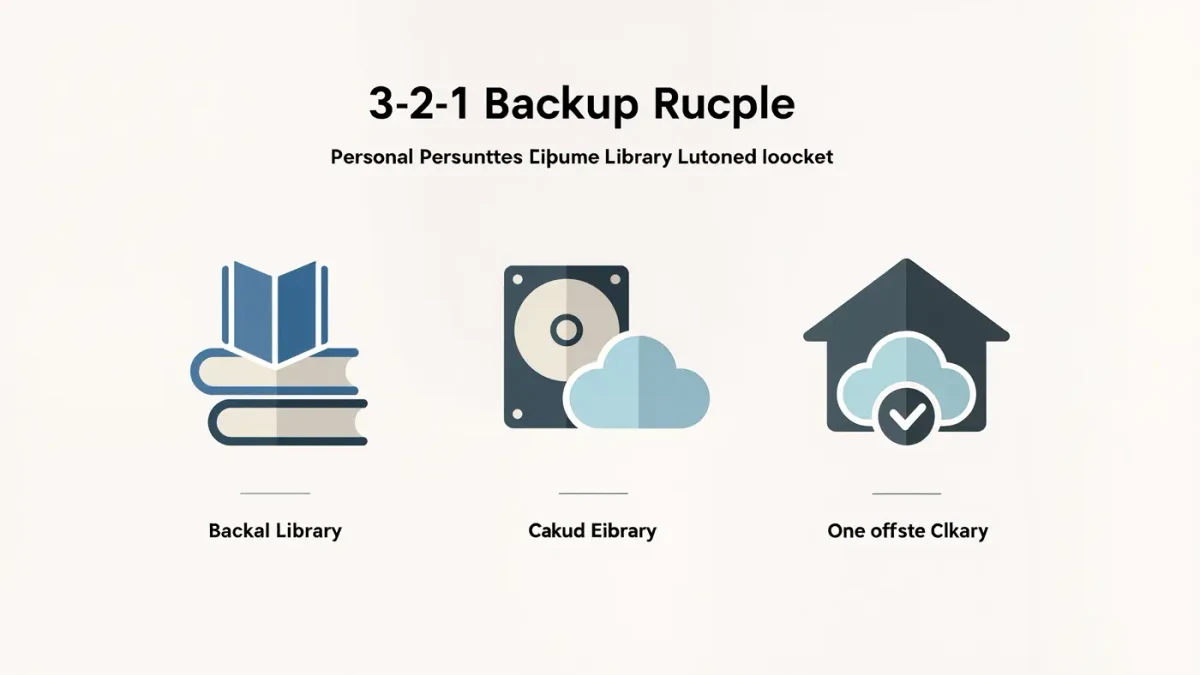
In day-to-day use, nothing else shifts. Your Kindle keeps working exactly as it did, and nothing forces you to download anything. The change simply adds an escape hatch that previously demanded third-party tools and legally murky workarounds. Sensible file hygiene — regular backups, one copy stored somewhere other than your laptop — turns that hatch into a durable library.
Which Kindle books will actually show the download button?
This is the detail most coverage glosses over. The DRM-free flag is set per title by whoever uploaded the book. Self-published authors choose it in KDP; large publishers have mostly kept DRM on, and there is no sign of a mass flip. So a typical mixed library may see only a modest share of titles eligible on January 20, 2026. A missing button is not a glitch — it is a publisher's decision.
Does DRM-free mean I own the book outright?
No, and this is where the disclaimer above earns its keep. A DRM-free purchase buys you a durable copy, not the copyright. Sharing, redistributing, or publicly uploading the file remains off-limits in the same way photocopying a paperback for strangers is. The U.S. Copyright Office publishes plain-language guidance on what copyright covers. File ownership is about permanence and device freedom, not new legal powers.
Can I download my whole Kindle library as EPUB?
No. Only titles flagged DRM-free by the publisher or author will offer EPUB and PDF downloads when the option arrives on January 20, 2026. DRM-protected purchases — most traditionally published ebooks — keep working inside Amazon's apps, devices, and DRM-wrapped USB transfers. Your library is not suddenly portable; the eligible slice of it is.
Will the downloaded EPUB files work on non-Kindle readers?
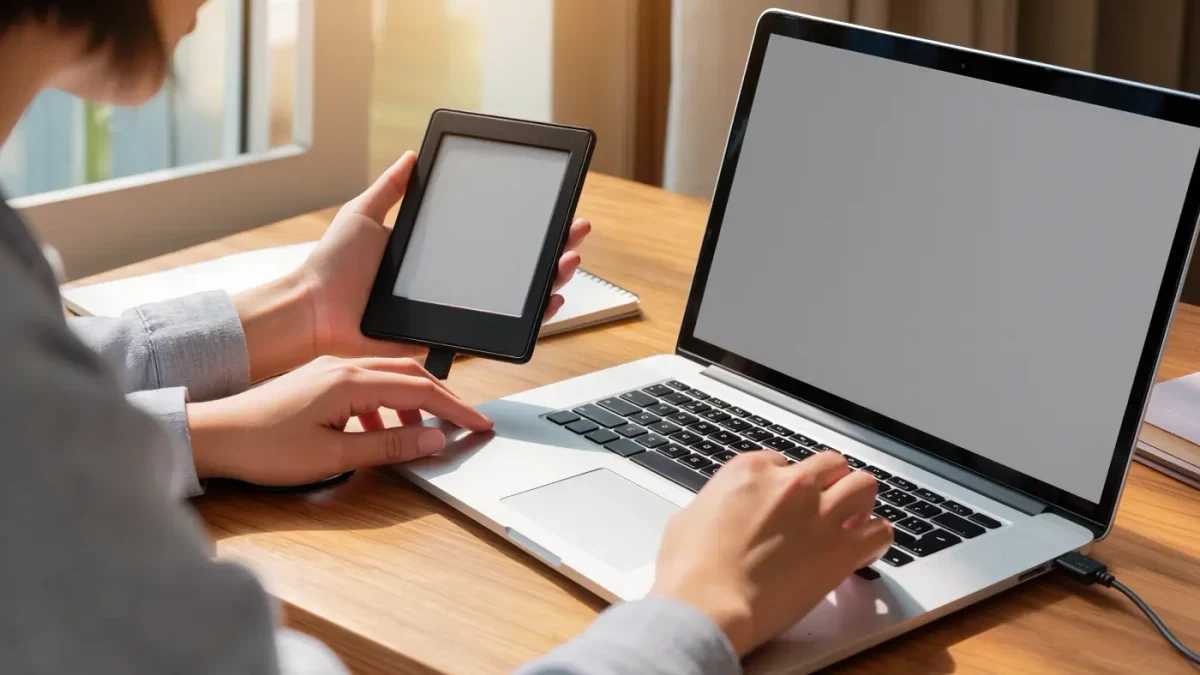
Yes, and that is the point. EPUB is the native format for Kobo, PocketBook, Onyx Boox, and most reading apps. A downloaded file behaves like any sideloaded book: copy it over USB and it opens. PDF downloads work too, though fixed-layout PDFs read best on screens larger than a six-inch e-reader.
Is it legal to share DRM-free files with friends?
Generally no. DRM-free means there is no technical lock, not that distribution rights came with the purchase. Copyright still covers the text, so handing out copies or uploading the file can infringe the author's rights exactly as photocopying a paperback would. Back up freely, share reluctantly, and lend through whatever tools the store itself provides.