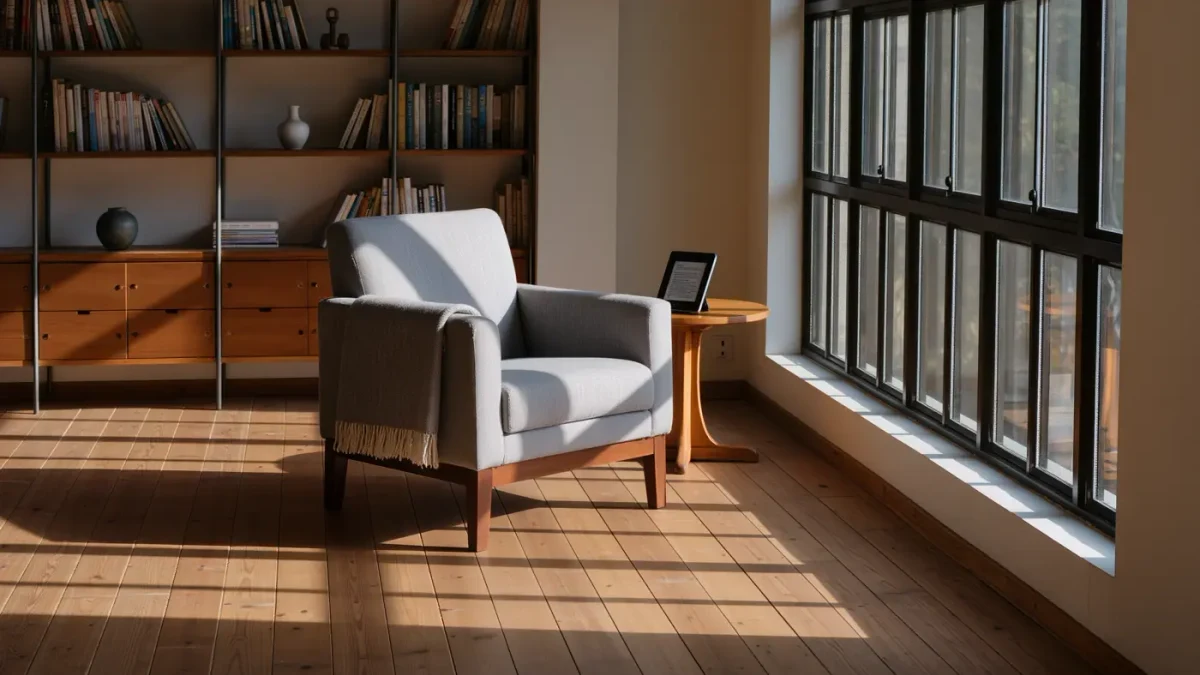
You do not need a spare room to make a reading spot. One corner, one seat, and one light will do. Reading is generally a quiet, solo activity, so the goal is simple: build one small place where the book is always within reach and nothing asks you to get up.
Small spaces are actually an advantage. A nook that hugs a wall feels snug in a way a big open room never will. Here is how to make one without a renovation budget. For related coverage, see How to Set Reading Goals You Actually Hit.
Start With the Window
If your home has a deep window, you already own the best nook site in the house. The classic fit is a window seat, which is a miniature sofa without a back, intended to fill the recess of a window. People have loved this spot for a long time. In the late 18th century, when tall narrow sash windows were almost universal, the window seat was in high favor. If your window is shallow, a narrow bench with a cushion can still work, since the seat does not need to fill the whole recess. Either way, a fitted bench with a thick cushion turns dead space into the coziest seat you own.
If There Is No Window, Pick a Chair That Hugs You
Any corner will do with the right chair. A wing chair is a good bet for a reading nook. Its tall sides were first made to shield the sitter from draughts and to trap heat from a fireplace, which tells you how snug the shape is. The design goes back to England in the 1600s, and the basic form has barely changed. Face the chair toward a wall or window, add a small side table, and the corner is claimed. Test any chair the way you will use it. Sit for ten minutes with a book before you commit. A seat that looks fine but holds your neck at a bad angle will stay empty.
Layer the Comfort
Comfort in a nook comes from layers. Add a throw blanket and one or two cushions. Put a lamp within arm's reach, since a dim nook is a short-lived one. A small lamp with a warm bulb beats a bright ceiling light, because the goal is a pool of light just big enough for pages. Keep a small shelf, basket, or stool next to the seat for the current book and the next one. If the floor is cold, a small rug makes the whole spot feel finished.
Keep It Small and Personal
Resist filling the nook with stuff. A seat, a light, a book, and one personal touch are enough: a framed photo, a candle, or a plant that likes the window. If you work from home, keep the nook screen-free. A spot with no laptop in sight makes reading feel like a real break. If kids share the home, put a low basket of picture books next to the adult shelf, so the nook belongs to them too. We covered a connected angle in How to Build a Daily Reading Habit.
Conclusion: One Corner Is All You Need
A cozy reading nook is not a design project. It is a promise to yourself that reading has a home here. Reading is generally a quiet, solo activity, and your nook should protect that quiet. Start with the seat you already have, improve one thing a week, and let the nook grow around your habits. The best nook is simply the one you use tonight.