A reading slump rarely means you have stopped loving books. It usually means every book on your shelf is asking for something you do not have right now: a long stretch of quiet, a fresh attention span, patience with a slow opening. The fix is not willpower. It is picking differently.
At its simplest, choosing a book means picking from several options — that is how Dictionary.com defines the verb, and the trouble is that a slump makes every option look identical. This guide breaks them apart by three questions: what mood are you in, how much time do you actually have, and what was the last book that worked?
Work through the decision tree below. It takes about five minutes and ends with a specific next book, not another hour of scrolling.
What should I read next? Start with your mood
The first question is not "what is good?" It is "what do I want to feel?" A reader who wants comfort and a reader who wants challenge need completely different books, and either can end up stalled if they grab the wrong one.
Pick one of these four states:
- Comfort. You want the reading equivalent of a familiar meal. Reread something you loved, or pick a book in a series you already trust. The point is zero risk, not novelty.
- Escape. You want to be somewhere else. Reach for a plot-driven genre you have enjoyed before — mystery, fantasy, thriller — and pick the shortest one on the shelf.
- Curiosity. You want to learn something. Choose a narrative nonfiction book on a topic you already find interesting, not one you think you should learn about.
- Restlessness. Nothing sounds good because everything sounds heavy. Try something structurally different from your usual: short stories, essays, or poetry. A form you rarely read resets expectations.
If none of those states fits, that is a signal too. Sometimes the slump is really fatigue, and the right move is a lighter reading setup rather than a different book — our guide to reading at night without eye strain covers one common version of that problem. Readers following this should also see How to Read at Night Without Eye Strain.
How much time do you actually have?
The second question is length, and it is the one readers most often ignore. A 500-page novel is a bad pick for a two-week stretch of 20-minute commutes, no matter how appealing the cover. Matching book length to available attention is the single most reliable slump-breaker.
Use this rough sorting rule:
- Under 200 pages or a short story collection: for slumps, busy weeks, and "I just want to finish something." Finishing a book — any book — restarts momentum.
- 200 to 400 pages: the default zone. Long enough to sink into, short enough to finish in a normal month of evening reading.
- Over 400 pages: only when you have a stable reading window and genuine enthusiasm for the premise. Otherwise it becomes the abandoned book that deepens the slump.
If long books keep defeating you, the problem may be pacing rather than selection — how to finally finish long books addresses that directly. And if you want a number to plan around, our piece on tracking your reading progress shows how page counts and daily minutes turn into a realistic finish date.
What was the last book that worked?
The third question is the most powerful one, and the least used. Instead of asking what you should read, ask what you did read last and enjoyed — then choose a neighbor of that book, not a stranger to it.
Neighbor means one step away, in one dimension only:
- Same genre, new author. You liked the last thriller; pick another thriller by someone different. One variable changes, so the risk stays low.
- Same author, different book. Reliable, but check that it is not a sequel you would need to backtrack for.
- Same mood, different genre. You liked the quiet melancholy of a literary novel; try a memoir with the same tone. Mood carries across categories.
This is also where genre pairings come in. Readers who stall between fiction and nonfiction often do well with narrative nonfiction — true stories told with the tools of a novel. Readers who stall between "serious" and "fun" often do well with genre fiction that has literary prose. The pairing solves the false choice, not the book.
Reviews help here, but read them for tone rather than verdict. Our guide to fiction versus nonfiction reviews explains what each type of review can and cannot tell you before you buy.
Practical steps: the five-minute decision tree
Put the three questions together and the slump has a route out. Run this sequence, in order, and stop at the first book that survives every step:
- Name your mood from the four states above: comfort, escape, curiosity, or restlessness.
- Name your time. Be honest about the next two weeks, not the ideal version of them.
- Name your last good book. One sentence: title, and what you liked about it.
- Pick one neighbor. Change the author, the genre, or the format — exactly one.
- Apply the length filter. If the candidate is too long for your real schedule, swap down a format: novella, stories, essays.
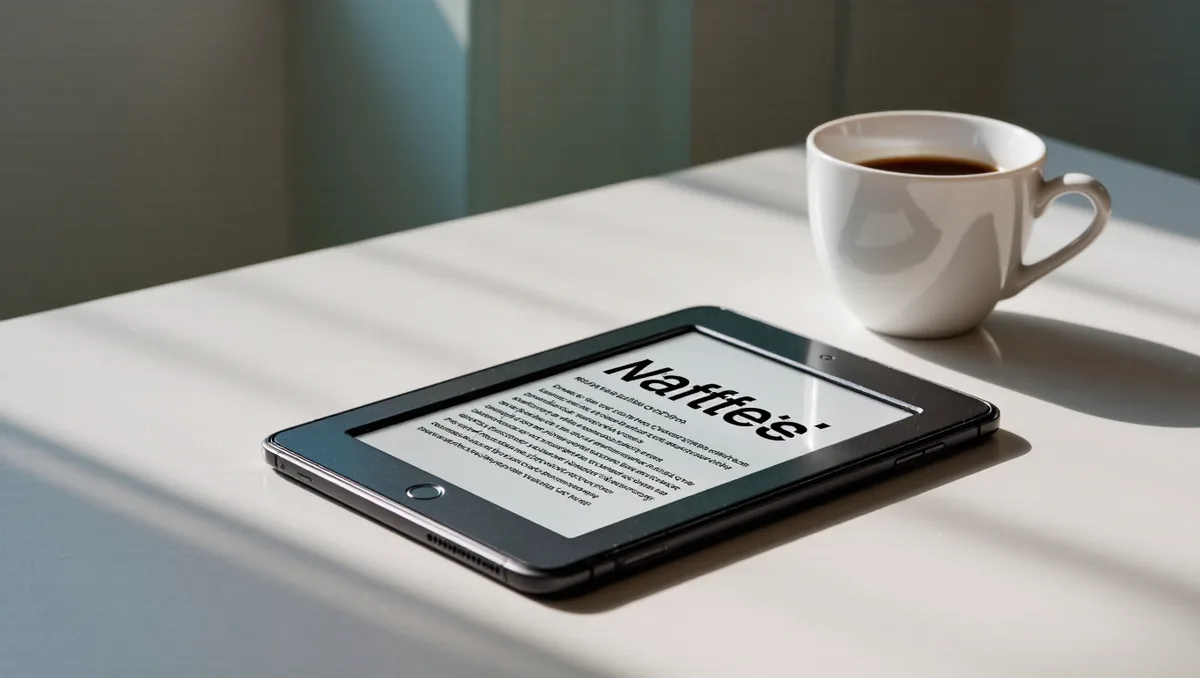
- Commit cheaply. Borrow it from the library before buying. If a library e-book is an option, our walkthrough of reading library books on a Kindle covers the mechanics.
- Give it a fair trial, then quit freely. A slump punishes obligation. If the book is not working after a reasonable sample, drop it without guilt and run the tree again.
One more habit helps: keep a short list of three candidates ready at all times, drawn from this process. Decision fatigue is a real part of the slump — the reader who stalls is often the reader choosing from a cold start every night. Our guide to organizing your digital library makes the candidates easier to see in the first place.
What this means for your reading year
Our analysis of the slump pattern is simple: it is almost never a taste problem, and almost always a matching problem. Books fail in a slump because they mismatch the reader's current mood, current schedule, or current attention — not because the reader has run out of books worth reading.
That reframing matters because it changes the response. The stalled reader does not need a harder challenge or a more ambitious goal; those often make things worse. The stalled reader needs a smaller, closer, better-matched pick — and the permission to abandon it. If goals are part of your reading life, setting reading goals you actually hit pairs well with this approach, since a modest goal plus a well-matched book is far more durable than a big goal plus a mismatched one.
What the evidence here does not settle is individual taste — no framework can tell you which specific novel will land. What it can do is narrow the field from "everything, forever" to three candidates that fit who you are this month. That narrowing is usually all the slump needs.