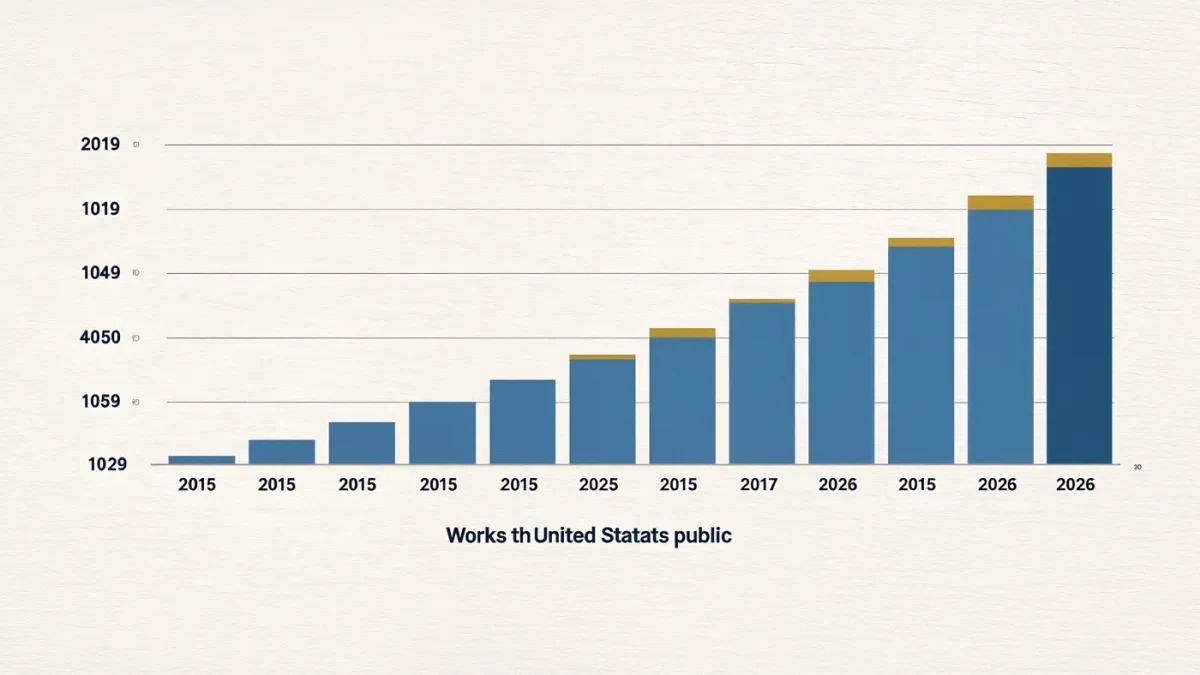
Yes — you can read the classics for free and keep them, legally, because most classics are in the public domain. As of January 2026, every work published in the United States through 1930 has entered the public domain under the U.S. Copyright Office's term rules. That is the entire Victorian era plus the Roaring Twenties. Free. Legal. Yours.
INKLESS BOOKS publishes information, not legal advice. Copyright law has exceptions, edge cases, and national differences, so treat this as a map, not a ruling. When in doubt, the Copyright Office's own publications are the place to verify.
What Exactly Is the Public Domain?
The public domain is the pool of works no longer protected by copyright — anyone may copy, share, sell, translate, or rewrite them without permission or payment. In the U.S., everything published through 1930 is now in it, and every January 1 another publishing year slides in. Shakespeare was never ours to lock up; Dracula (1897) joined the party long ago.
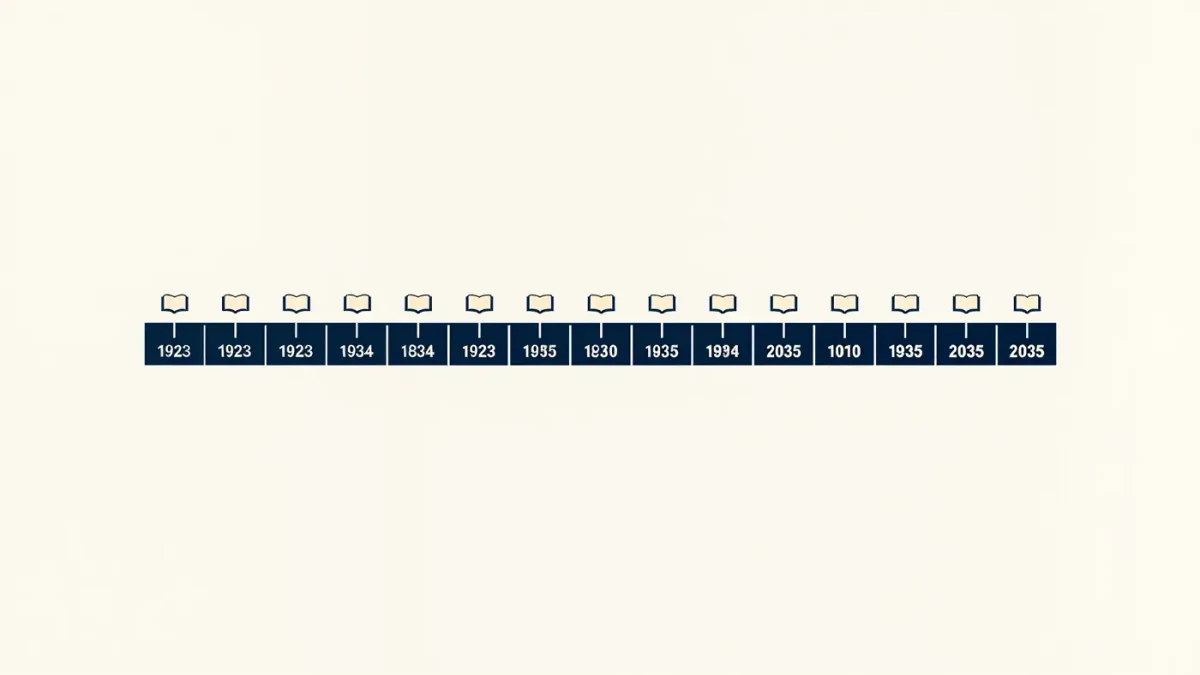
The mechanics are simpler than they sound. U.S. works published before 1978 with a proper copyright notice got a fixed term, which later laws stretched to 95 years from publication. That is why 1930 titles went free on January 1, 2026, and 1931 titles will follow on January 1, 2027. Works first published in 1978 or later run on a different clock — generally the author's life plus 70 years.
For a table that untangles every era, exception, and renewal rule, Cornell University's public domain reference is the resource librarians themselves keep bookmarked. One wrinkle worth knowing: each country sets its own terms, so a book free in New York may still be protected in Berlin. For old U.S. classics, though, you are on very solid ground almost everywhere.
Where Can You Legally Get Free Classic E-Books?
Four kinds of sources, all legal: government digital collections, university libraries, volunteer transcription archives, and commercial stores giving away public domain editions. Each offers downloads you keep — files on your device, not loans that vanish. The differences are catalog size and editing quality.
Government collections are the most authoritative starting point. The Library of Congress digital collections hold scanned and transcribed texts alongside manuscripts and photographs, and national libraries in other countries run similar programs. University library sites aggregate reliable transcriptions, often with scholarly introductions written by people who genuinely love the footnotes.
Volunteer archives — Project Gutenberg is the veteran of the genre — have hand-corrected tens of thousands of titles over decades, usually offering plain-text and EPUB files. Finally, every major e-book store carries free editions of public domain classics, because publishers use them as introduction funnels. Your public library also lends classics digitally; that route is a loan rather than a keep, but it rounds out the toolbox.
Why Do Free Editions Sometimes Look Terrible?
Because the words are free but the craft is not. A raw scan or a machine conversion can produce missing chapters, footnotes dumped at the end with no links, straight quotes masquerading as typography, and chapter headings that read like ransom notes. The text is public domain; the typesetting never typeset itself.
The good news: spotting quality takes ninety seconds. Download the sample and check five things — a linked table of contents, proper chapter breaks, real quotation marks, footnotes that actually link, and a named editor or publisher rather than an anonymous upload. Volunteer archives vary wildly from title to title; the same archive can offer a beautifully proofread Jane Eyre and a mangled third-rate sensation novel next to it.
This is also why paid editions of free books exist and sell. A one- or two-dollar store edition of Middlemarch buys you a working table of contents, sane line spacing, corrected transcription, and sometimes genuinely useful notes. Free is excellent; occasionally, ninety-nine cents is even better than free.
Can You Keep, Share, and Remix These Books?
In the U.S., for pre-1931 texts, yes: download, keep, email to a class, print a copy, rewrite the ending, publish a sequel where the vampires unionize. The underlying text belongs to everyone. What still belongs to someone is the new layer wrapped around it.
That layer matters more than people expect. A 2020 translation of a French novel is a fresh, copyrighted work even though the 1870 original is free. So are new introductions, annotations, and restored editions with scholarly apparatus. Mixing a public domain original with a copyrighted translation in your classroom packet is where well-meaning people trip — use an older translation, or check its date.
It is also why publishers keep minting fresh versions of the same Dickens novel every year. Anyone may publish A Christmas Carol; only one publisher may publish that specific introduction by that specific novelist. The classics are a commons, but the fences around individual editions are real.
Frequently Asked Questions About Free Classic E-Books
Is Project Gutenberg legal to use?
Yes. It distributes texts whose U.S. copyright has expired or which were dedicated to the public domain, and it has operated since 1971. Files are plain and DRM-free, so they work on nearly any e-reader. In other countries, a handful of titles may still be protected locally, so glance at the archive's own notices when abroad.
What about books published after 1930 — are they still copyrighted?
Mostly yes, but with a famous loophole: many works published between 1930 and 1963 entered the public domain because their copyrights were never renewed. Renewal records determine each case, and the Cornell table referenced above walks through them. Absent proof of non-renewal, assume a newer book is protected.
Can I read free classics on any device?
Essentially yes. Public domain files typically come as EPUB or plain text, with no digital locks, so they load on every major e-reader, tablet, and phone app. If a store won't accept a side-loaded file, a free conversion tool will reshape it in seconds. Freedom of format is part of the deal.
Are free editions the same text as the paid ones?
The underlying words are identical — there is only one Frankenstein of 1818. Paid editions add typography, proofreading, footnotes, and introductions, which range from decorative to genuinely enlightening. Serious students often keep both: a free copy to annotate wildly and a curated one to admire.