Because digital shelves never run out of space — and a reader who finishes book one buys books two through nine before midnight. U.S. trade e-book revenue has hovered near one billion dollars a year in recent StatShot reports from the Association of American Publishers (AAP) through 2024, and backlist e-books make up most of that shelf. New releases get the banners. The backlist collects.
None of this is an accident of taste. It is what happens when a product built for a three-foot shelf moves into a store with infinite aisles and a perfect memory. Below: the economics, the store mechanics, and the reader psychology that keep older titles winning — plus what publishers do about it.
What Is Backlist, and Why Does It Sell So Well?
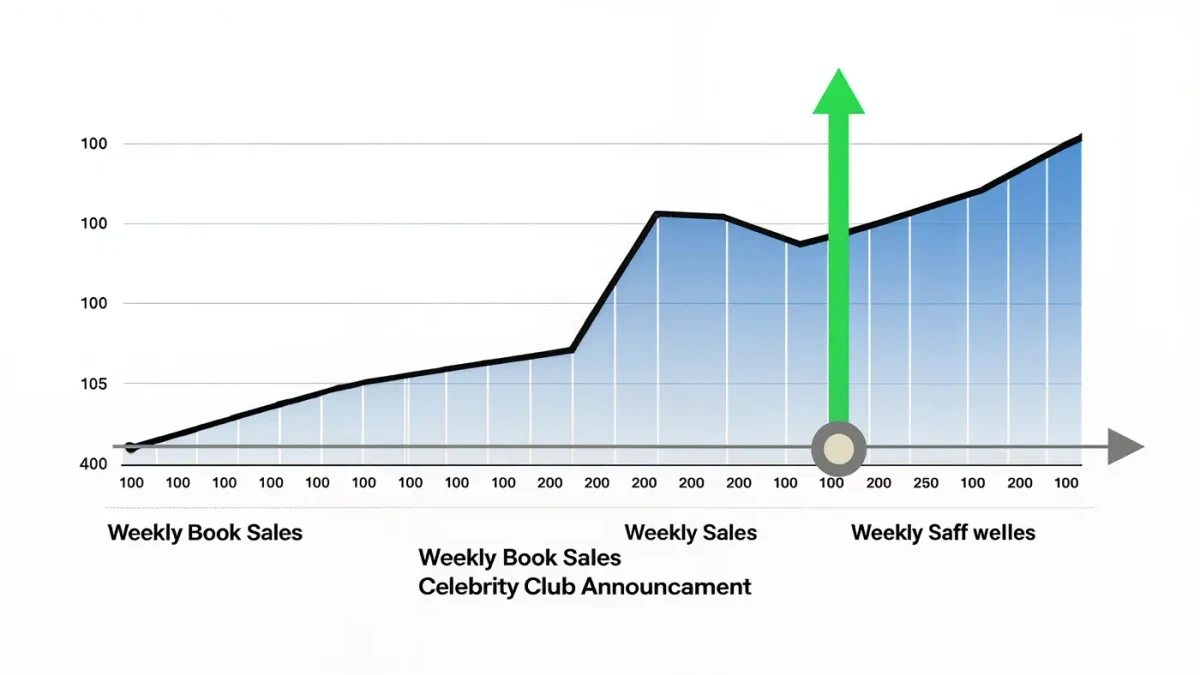
Backlist is every title published more than a year ago; frontlist is everything newer. In a physical store, backlist fights for scarce space against the shipment arriving Tuesday, and a slow book gets stripped and returned. In a digital store, the 2014 novel and the 2026 release occupy equal pixels forever, at zero warehousing cost. That single difference rewrites the sales curve.
Print runs on scarcity: finite shelf space, finite print runs, a returns system that pulps failure. Digital retail runs on abundance. Once a file exists, stocking it costs nothing, so an old book's only remaining job is to be findable — and modern stores are extremely good at finding things. Search, series pages, and recommendation engines surface book one of a finished series to fresh readers every single day, which is why a ten-year-old title with a steady trickle can quietly out-earn a midlist debut over a full year.
Then the reviews compound. Four thousand ratings beat forty, and only time produces four thousand. Publishers and booksellers have said for years that the majority of trade sales come from backlist, and industry reporting — including Publishers Weekly's annual coverage through 2025 — keeps confirming it. The e-book store simply removes the last structural excuses, shelf space and print runs, for letting an older title die a natural death.
How Do Digital Stores Change the Economics?
They delete the three costs that discipline print: shelf space, inventory risk, and returns. A digital file carried by a store costs effectively nothing to keep listed, so a backlist e-book's only real expense is staying discoverable. That rewards long tails, series funnels, and patient pricing over launch-week spectacle.
In print, a book gets roughly six weeks on a front table to prove itself before the table turns over. In digital, the launch never ends. Every day is a fresh chance for an algorithm to put a nine-year-old mystery in front of someone who just finished the author's newest one. Marketers exploit this deliberately: first-in-series price drops, boxed sets that lower the per-book price, and pre-order campaigns for book six that send new readers sprinting back to book one. The storefront becomes a loop rather than a funnel.
The pattern shows up across format reports, and for ongoing numbers on how digital retail reshaped publishing, Reuters' media and telecom industry coverage is a reliable running record. The short version, though, fits on a napkin.
| Aspect | Frontlist e-books | Backlist e-books |
|---|---|---|
| Store placement | Launch banners, bestseller lists | Search, series pages, also-boughts |
| Typical price | Full price at launch | Frequent promos, often under $5 |
| Sales curve | Sharp spike, fast decay | Low, wide, nearly flat for years |
| Buyer risk | Unproven, few reviews | Thousands of reviews, finished series |
Why Do Readers Keep Choosing Older Titles?
Because older titles arrive pre-verified. They carry stacks of reviews, complete series, friendlier prices, and word of mouth that has survived years of filtering. A new release is a promise; a backlist book is a receipt.
The psychology is mostly about certainty and momentum. If a series is finished, there is no waiting for a sequel that may arrive in three years — you can read all nine books in one greasy slide. If friends argued about a novel in 2019, the argument has settled into a consensus you can check. Online reading communities have repeatedly pushed decade-old titles back onto bestseller lists years after publication, something that essentially could not happen when shelf space was the only billboard.
Price seals it. Backlist promotions routinely put a well-reviewed novel under five dollars, and a reader taking a chance at that price feels almost no friction. The result is a self-reinforcing loop: cheap, well-reviewed, instantly available books sell; selling keeps them visible; being visible sells them again.
How Do Publishers Keep Old E-Books Competitive?
With fresh covers, corrected files, disciplined pricing, and clean metadata. A backlist e-book still wearing 2011 typesetting and a blurry cover quietly loses sales it could win, so refurbishment has become routine publishing work rather than an afterthought.
In practice that means series-wide cover refreshes so book four finally matches book nine, anniversary reissues with new introductions, repaired conversion errors, and blurbs updated to name authors who became famous later. It also means rights reversions: authors regaining e-book rights to out-of-print work and reissuing it themselves or through small presses, which keeps titles alive that print economics had left for dead.
The quiet truth of the digital shelf is that books no longer have to die of old age. They only die of neglect — and neglect, unlike shelf space, is fixable.
Frequently Asked Questions About Backlist E-Books
Do backlist e-books really outsell new releases?
Over any window longer than a few months, often yes — especially in genre fiction where series dominate. Launch weeks are loud and concentrated, but industry reporting through 2025 keeps showing the majority of trade sales coming from titles at least a year old. Loud is not the same as largest.
Are backlist e-books cheaper because they are worse?
No. Price reflects marketing budgets and competition, not quality. A publisher spends heavily to launch a frontlist title, then lets backlist pricing float lower because the file is already paid for. Plenty of the best things you read this year will cost $2.99 for exactly this reason.
How do I find good backlist e-books?
Follow series pages instead of new-release tables. Open a book you loved and study its also-bought chain, browse award shortlists from three to five years back, and check an author's earlier catalogue — the book written just before the breakout hit is usually the hidden bargain.
Do older e-books have worse files?
Sometimes. Titles converted in the early 2010s can carry odd spacing, missing footnotes, or broken tables. Download the free sample and check the table of contents and the first chapter before buying — a two-minute habit that prevents most digital regrets.