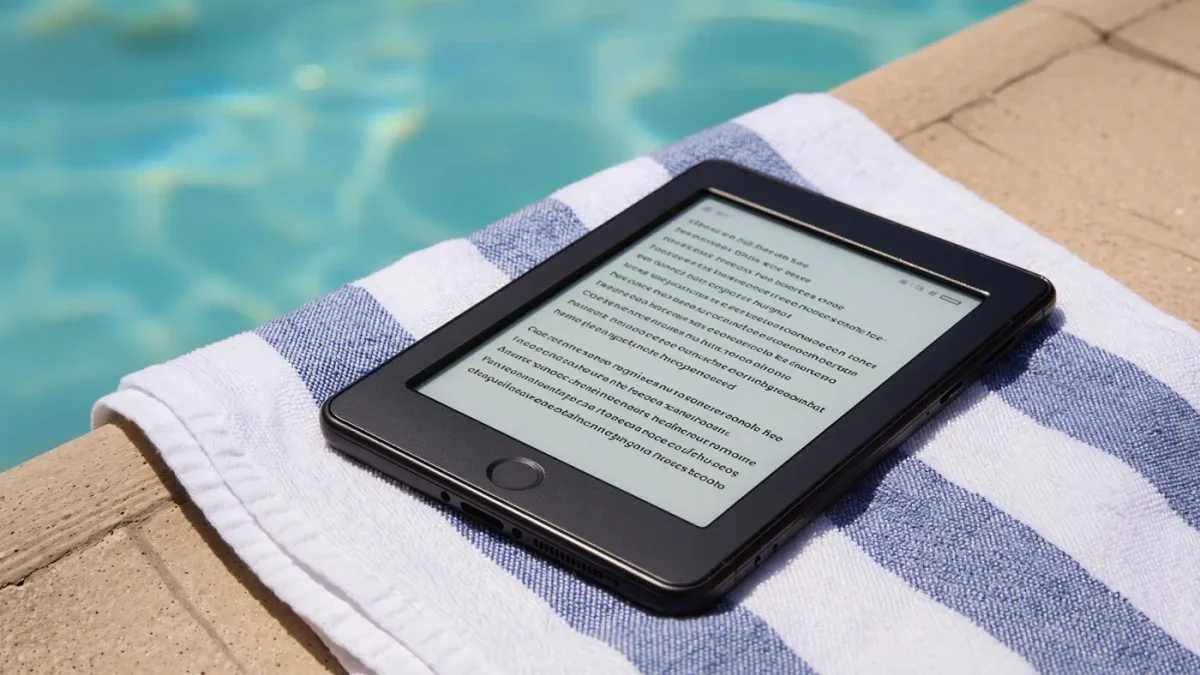
On the supplied evidence — Amazon's spec sheet and named coverage from PCMag and Wired — the entry-level Kindle (2025) is the pick at $109.99 as of January 2026. It puts the same 300 ppi screen density as the $159.99 Paperwhite into the cheapest current big-brand body you can buy, and for plain novel reading it is most of the experience for well under the cap. The catch is real, though: no waterproofing and no warm front light. If neither matters to you, buy it. Always.
| Product | Maker | Price | Configuration | Release date | Basis of coverage |
|---|---|---|---|---|---|
| Kindle (2025) | Amazon | $109.99 as of January 2026 | 6-inch 300 ppi E Ink, 16 GB, USB-C | October 2025 | Amazon spec page; PCMag and Wired roundups |
Where the evidence comes from
- Amazon's Kindle spec and buying-guide pages: the $109.99 price, 6-inch 300 ppi glare-free display, 16 GB storage, 5.56 oz weight, USB-C charging, and a battery claim of about six weeks per charge at half an hour of reading a day with Wi-Fi off.
- PCMag's reviews of the entry Kindle and Paperwhite Kids, which position the basic model against the $159.99 Paperwhite.
- Rakuten Kobo's US store listing for the Clara BW, plus Good e-Reader's sale reporting, for Kobo street pricing.
- The eBook Reader Blog's March 2025 report on PocketBook raising US prices by about $10 across its lineup.
Is the cheap Kindle actually good?
Yes. Per Amazon's spec sheet, the 2025 Kindle carries a 6-inch 300 ppi glare-free E Ink display — the same pixel density as the Paperwhite — plus an adjustable front light, 16 GB of storage, USB-C and a 5.56 oz body. That is a genuinely small, genuinely sharp reader, and nothing about the panel says budget.
What extra money elsewhere buys is comfort, not clarity. The Paperwhite adds a larger 7-inch panel, warm-tone lighting and an IPX8 rating; the Colorsoft adds color. Body text at the same font size looks effectively identical on all three. It is fine — and knowing what fine costs you is the whole game at this price.
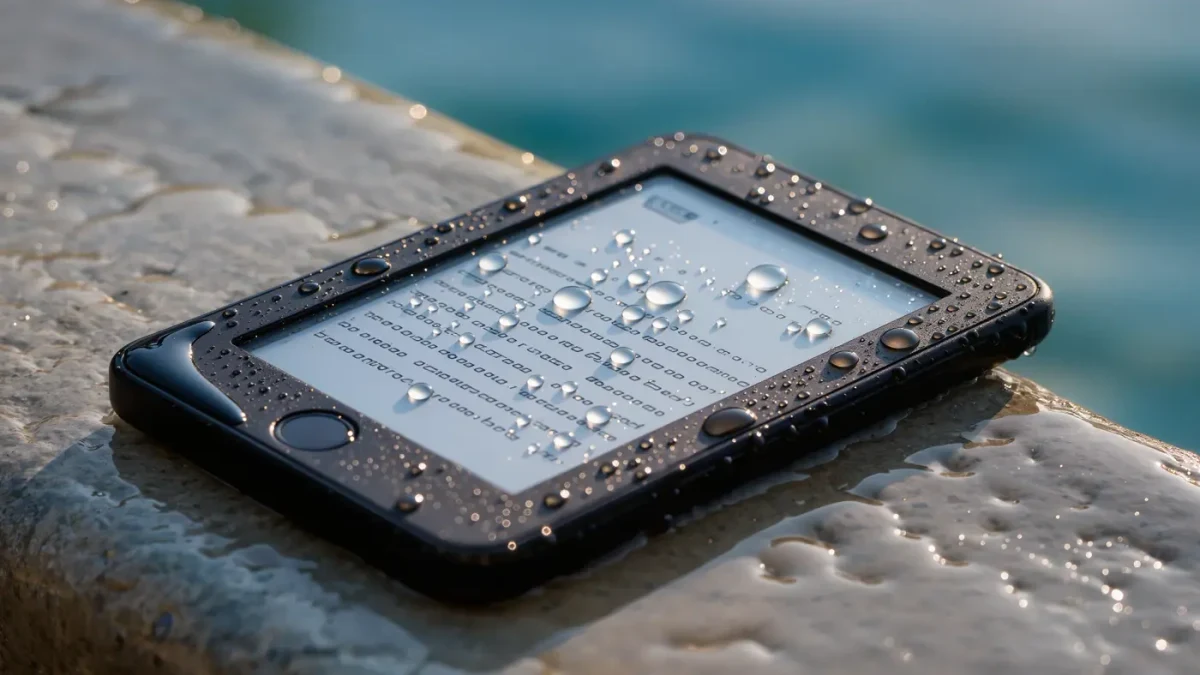
Concretely, you give up three things: water resistance (no IP rating appears on the spec sheet), warm light (the front light is fixed-tone), and the Paperwhite's longer battery claim. None of those change the words on the page.
How slow is a budget e-reader in daily use?
Honestly, nobody in the supplied coverage has bench-tested this. Amazon claims 25 percent faster performance for the 2025 model over its predecessor; PCMag's coverage of this hardware generation describes page turns as quick. No supplied source measured page-turn latency against Kobo or PocketBook, so treat any snappiness ranking you read elsewhere as opinion until someone publishes numbers.
What the sources do establish: 300 ppi under $150 is no longer unusual, 16 GB is the standard allocation, and USB-C is universal across the current big-brand lines. The PocketBook Verse Pro matches the core spec at roughly $190 per Good e-Reader's pricing coverage, after the 2025 US price increases reported by The eBook Reader Blog. A fine device. Not a $150 answer.
Will the battery actually last six weeks?
Amazon's claim of about six weeks per charge assumes half an hour of daily reading with Wi-Fi off. Real readers who leave the front light up and the radio on will see less; none of the supplied coverage ran an independent drain test on this model. The Paperwhite is rated for up to 12 weeks under the same assumptions, per Amazon's page — one more argument for stretching if you charge reluctantly.
Which ecosystem locks you in less?
If you buy books from Amazon already, the basic Kindle is friction itself: one-click buying, sync everywhere, and Send to Kindle accepts EPUB files by converting them, per Amazon's documentation. Kobo's Clara BW reads EPUB natively with no conversion step and side-loads politely; PocketBook is the most format-agnostic of the three. Remember that store-bought ebooks are licensed, not owned, whichever door you walk through — and that reading itself long predates any store, as the Library of Congress's digital reading programs politely remind us.
The Kobo also brings IPX8 waterproofing and dark mode per its listing, at a street price that has hovered around $150 and dipped near $140 in sales covered by Good e-Reader. That makes it the runner-up, and the pick if waterproofing is non-negotiable on a hard budget.
How does the under-$150 field compare?
| Model | Price with date | Why pick it | Skip it if… |
|---|---|---|---|
| Kindle (2025) | $109.99, January 2026 | Sharpest screen per dollar among big brands; USB-C; featherweight body | You read in the bath or demand warm light — it has neither |
| Kobo Clara BW | about $150, January 2026 | IPX8 waterproofing, native EPUB, dark mode, 300 ppi Carta 1300 screen | You are already deep in the Kindle store; the premium buys comfort, not sharpness |
| PocketBook Verse Pro | about $190, January 2026 | Open ecosystem, physical page buttons, audio support | Your cap is a hard $150 — it sailed past that line in 2025 |
| Kindle Paperwhite (12th gen) | $159.99, January 2026 | 7-inch panel, warm light, IPX8, 12-week battery claim | $10 over the cap; only worth it if the cap is soft |
Final verdict
First e-reader, mostly novels, mostly indoors: the Kindle (2025) at $109.99 is the obvious buy, and the money you save buys a lot of ebooks. Upgraders should look higher: if you already own a recent reader, the basic Kindle repeats compromises you deliberately escaped — move along to the Paperwhite or a color panel instead.
Platform and region caveats: every price above is US-listed as of January 2026; Kobo and PocketBook street prices swing by market, and Kindle deal events regularly shave the list price, per the deal coverage tracked through 2025. What the sources did not establish: none of the supplied coverage measured page-turn latency, screen contrast, or independent battery drain on any model here. Every number is a maker's claim or a retailer's listing — which is precisely why the cheapest defensible pick wins.
Frequently asked questions
Is there a waterproof e-reader under $150?
The Kobo Clara BW is the closest thing: IPX8 per Kobo's own listing, with street prices around $140 to $150 as of January 2026 per Good e-Reader's sale coverage. That lands right at the cap. Amazon's under-$150 Kindle carries no water rating at all, so keep it away from the tub.
Does the basic Kindle read EPUB files?
Indirectly. Amazon's Send to Kindle service accepts EPUB and converts it to Kindle format, per Amazon's documentation. Drag-and-drop EPUB is a Kobo and PocketBook feature. If your library is EPUB-only and conversion steps annoy you, budget for the Clara BW instead.
Is 16 GB of storage enough?
For text, almost certainly. Per Amazon's listing, the allocation holds thousands of ebooks. Comics, manga, audiobooks and PDFs eat storage far faster than prose, so if your diet is visual or audio, treat 16 GB as a floor and shop accordingly.
Should I wait for a sale?
Probably, if your timing is flexible. Deal coverage through 2025 showed meaningful Kindle discounts — IGN recorded the Paperwhite Kids edition at $129.99 during one promotion. The basic Kindle dips too. If you need a reader today, though, $109.99 is already a defensible price.