Because digital retail finally gave the length a business model. The novella — roughly 17,500 to 40,000 words — all but vanished from print shelves, then quietly returned as an e-book format: Nnedi Okorafor's Binti, a story you can finish in an evening, won the Hugo Award for Best Novella in 2016, and short-fiction categories have multiplied in stores ever since. Print had no shelf for them. Digital has nothing but shelf.
The novella's comeback is less a literary trend than an accounting correction. For most of the twentieth century the format failed commercially for reasons that had nothing to do with reader appetite — and e-commerce deleted those reasons one by one.
Why Did the Novella Disappear From Print?
Economics, not taste. A printed book has a fixed floor cost — paper, printing, binding, shipping, returns handling — that barely cares whether the manuscript is 90 pages or 400. A novella had to be priced like a real book while looking, on the shelf, like a pamphlet dressed up as one. Retailers hated it, so publishers stopped offering it.
The physical shelf made it worse. A novella occupies the same slot as a novel but delivers fewer perceived pages per dollar, and spine-out retail is a page-count beauty contest. Paperback racks of the mid-century era did carry shorter fiction; as mass-market racks thinned and trade paperbacks thickened, the format got squeezed out of the only real estate it had.
Writers kept writing them anyway, because some stories are simply that size. For decades the industry answer was to ask authors to pad — add a subplot, stretch the middle — or to bury the text in a collection where it would sell as a bonus rather than a title. Readers lost the standalone novella; writers lost the standalone price.
What Made Short Fiction Viable Again?
Zero manufacturing cost. Once there is no print run, price can match length: a $2.99 novella is honest, a $2.99 printed artifact is impossible. Digital storefronts also gave short fiction discoverable categories of its own, so a two-hour read finally had a shelf label instead of an apology.
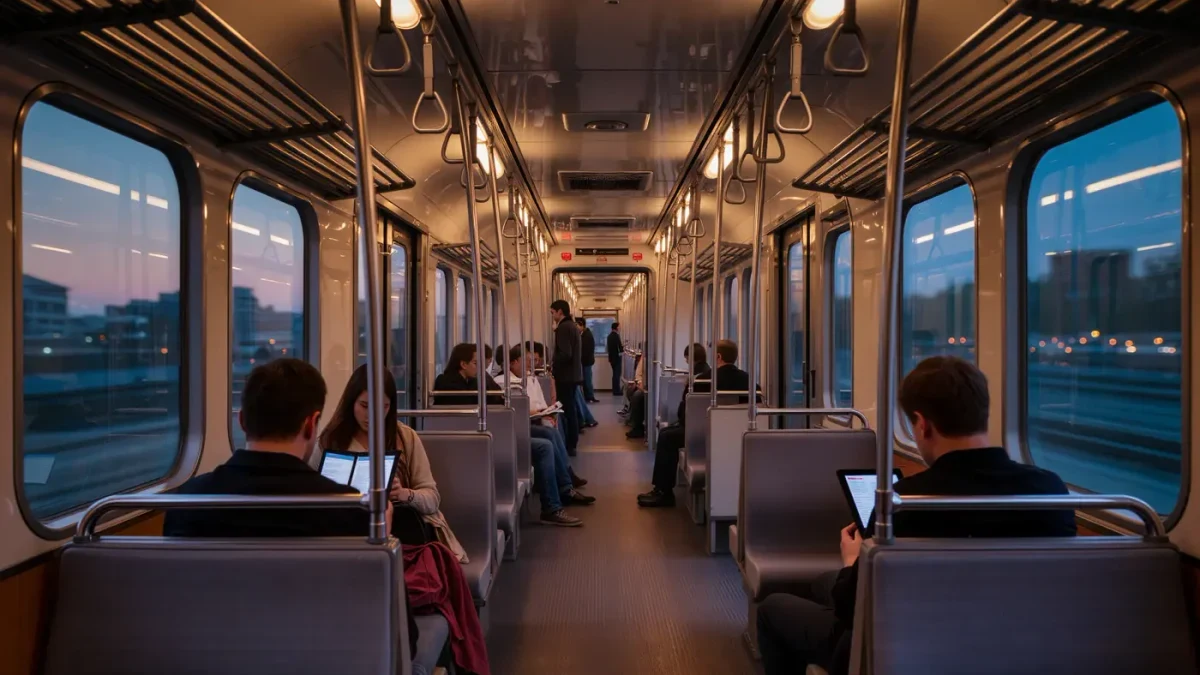
The pivots came early. Amazon's Kindle Singles program, launched in 2011, was built specifically for works too long for magazines and too short for print — proof that a market existed. Genre publishers followed: Tor.com's dedicated novella line, launched in 2015, showed the format could support original, award-winning fiction at scale rather than as an accident. Meanwhile, per Pew Research Center's 2022 report on 2021 data, about three in ten U.S. adults were reading e-books, and short titles fit the dominant reading pattern those readers describe — commutes, queues, lunch breaks, the last half hour before sleep.
Serialization and single-author follow-ups benefit too. A novelist can release a 30,000-word bridge story between book two and book three, fans get something new in months instead of years, and the author keeps the series warm. It is the publishing equivalent of a single between albums.
How Do You Find Novellas Worth Your Time?
Through awards shortlists, dedicated novella lines, and short-fiction magazines — the three filters that consistently surface quality. Unlike novels, novellas get little front-table marketing, so curation happens mostly through these channels and through reader word of mouth.
A practical starting inventory:
- Award novella shortlists. The Hugo and Nebula Awards publish novella categories every year; five nominees per year per award is a decade of excellent, verified-short reading.
- Publisher novella lines. Several genre imprints run dedicated short-fiction programs with consistent editing standards and honest pricing.
- Short-fiction magazines. Long-running fantasy, science fiction, and literary magazines publish novellas across issues and in standalone e-editions.
- Storefront short-read shelves. Filter store categories by length to find titles in the one-to-three-hour range.
- Your favorite novelists' side lengths. Many write bridge novellas inside their series; check the author page, not just the new-release table.
Coverage of short fiction has grown alongside it; the BBC's Culture section regularly tracks prize shortlists and format trends if you want a standing digest.
Are Novellas a Good Deal Compared to Novels?
Per hour of reading, often yes — a $2.99 novella that delivers two good evenings can beat a $14.99 novel that sags in the middle third. The honest caveat: pricing is inconsistent, and some novellas carry novel prices. The format rewards price-aware buyers and punishes impulse ones.
Here is the rough arithmetic of the three formats as they typically appear in e-book stores:
| Format | Typical length | Typical e-book price | Reading time |
|---|---|---|---|
| Short story | Under 7,500 words | $0.99–$2.99 | Under an hour |
| Novella | 17,500–40,000 words | $1.99–$6.99 | Two to three hours |
| Novel | 80,000–120,000 words | $4.99–$14.99 | Eight to fifteen hours |
Read that as a menu, not a contract. The deeper advantage is finishing: a novella you complete on a Tuesday beats a masterpiece you abandon on page 60, and the completion rate is the quiet metric driving the format's return.
Frequently Asked Questions About Novellas
What counts as a novella, exactly?
By the major awards' definitions, roughly 17,500 to 40,000 words — longer than a short story, shorter than a novel, with the pacing of neither. In practice, e-book stores shelve anything from about an hour's read to a long weekend as short fiction. The word-count borders are conventions, not laws.
Are novellas easier to write than novels?
No — many writers say they are harder. A novella demands a novel's emotional arc with none of the room to wander; compression is a skill the padding era never taught. The format favors writers who can end things, which is rarer than it sounds.
Why do some novellas cost as much as novels?
Rights, licensing, and pricing strategy — a boxed pairing, a limited program, or a publisher testing demand. The file length does not obligate anyone to discount it. Check the word count in the product details before buying; the sample usually reveals the true heft in one tap.
Do novellas work on subscription reading services?
Yes — short fiction is well represented on the major all-you-can-read platforms, and its length suits them: a subscriber can finish one in a sitting or two, which makes the catalog feel active rather than aspirational. Availability varies by title and service, as always.