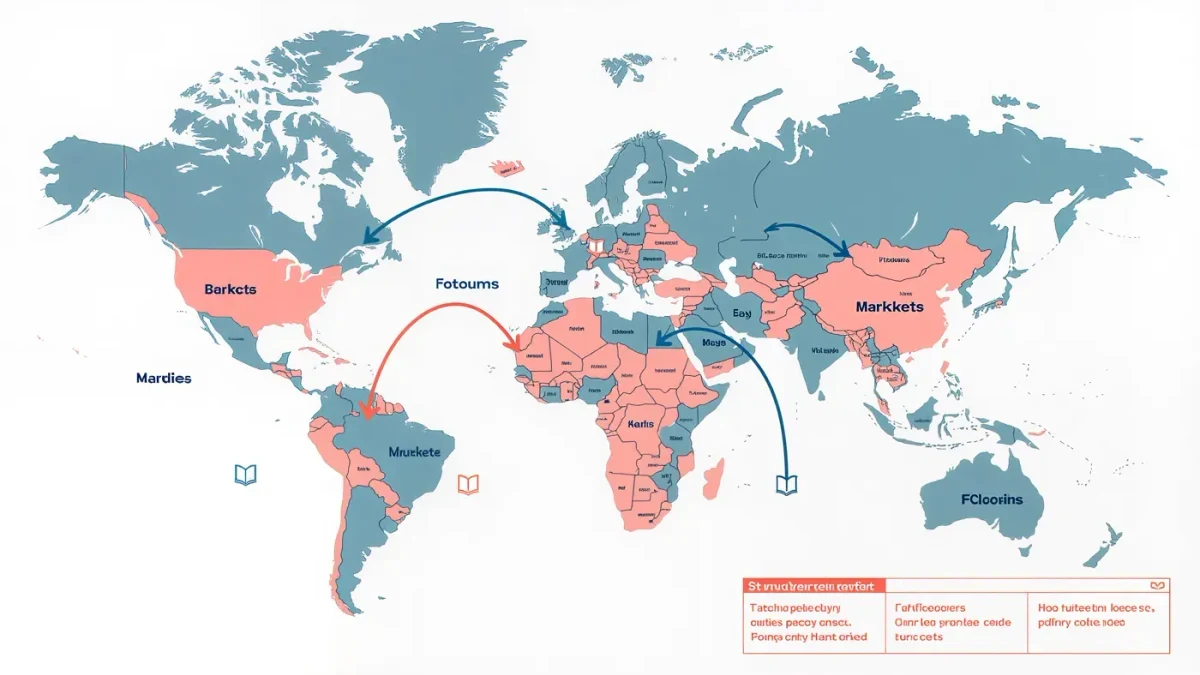
Because digital stores have no borders, so translated fiction finally moves at the speed of its readers. Nielsen BookData analyses reported in 2018 showed UK sales of translated fiction growing sharply while the overall book market barely moved, and e-books then removed what friction remained: waiting years for a local print edition, paying import markups, finding a bookseller who stocks Icelandic noir. Translation used to be a special order. Now it is a search bar.
For most of modern publishing, literature crossed borders slower than people did. The digital shelf didn't just speed that up — it changed who gets to take the risk on a foreign author in the first place, and that is the more interesting story.
Why Did Translations Used to Take So Long — or Never Arrive?
Because every step was expensive and risky. A foreign book needs a rights sale, a translator's months of work, an editor, and a print run — all before a single sale, in a market where the author is unknown by definition. Fail the bet, and the books come back from stores. Most publishers declined the bet.
The numbers were brutal for decades. The share of translation in English-language publishing has long been estimated in the low single digits — a figure industry analysts have repeated since the 2000s with only mild improvement. Meanwhile the books that did cross over arrived one to three years after their home-market success, sometimes with a different translator than the buzz warranted, often in a small print run that vanished before word of mouth formed.
Readers experienced this as absence. You would hear about a French novel everyone in Paris was reading, note that no English edition existed, and quietly forget. The gatekeeping wasn't malicious; it was arithmetic. But arithmetic gatekeeps harder than malice ever could.
What Changed With Digital Retail?
The economics of niche collapsed. An e-book edition needs no print run, no warehouse slot, and no bet on 3,000 copies — just a translated file on a global storefront. Small specialist publishers, several of them founded specifically to publish translations, could take chances the conglomerates couldn't justify, and the books they bet on now stay in print forever.
Three shifts did the heavy lifting. First, day-one availability: an English e-edition now appears in every market simultaneously, so expats, bilingual readers, and the simply impatient all buy the same file in the same week. Second, permanent backlist: a translation that took eight years to find its audience is no longer pulped at year two — digital stock never runs out. Third, prize amplification: international awards like the Booker Prize's translated-fiction iteration put a spotlight on books that would once have shipped three hundred copies and disappeared.
The result is a loop: translation sells → digital makes selling possible → presses take more risks → more translated fiction exists to find. Readers who assumed they hated translated fiction mostly hated the three-title selection. Selection, it turned out, was the whole problem.
How Do Reading Apps Help With Books in Other Languages?
They lower the cost of difficulty. Built-in dictionaries, tap-to-lookup, and instant footnotes mean a reader in Ohio can limp through a Spanish novel with sixty lookups instead of a paper dictionary, and a reader in Osaka can read English fiction with training wheels attached. Difficulty used to require dedication. Now it requires mild curiosity.
This cuts in two directions. English speakers attempt originals they'd never have bought in print — reading Italian with a tap-activated safety net, then discovering the translation's missing cadence. And non-native English speakers, one of publishing's quietest giant audiences, read English-language e-books with comprehension tools that paper never offered. The e-reader is, among other things, the best language-learning device ever disguised as a book shop.
The honest limit: literary style still punishes learners. Tap-to-translate gets you through plot, not through wit; idiom remains the final boss. But novels are long, and repetition is a teacher. Finishing a real book in a second language is now an attainable dare rather than an academic fantasy.
Where Do You Find Translated E-Books?
Through specialist presses, international prize lists, and the translated-fiction shelves the big stores now maintain. Discovery is still curated — algorithms underserve books whose marketing budget is one newsletter — so human filters do the work. Four reliable ones:
- Specialist translation presses. A handful of small publishers do nothing but translated fiction; their catalogs are curated reading lists by definition.
- International prize shortlists. The International Booker and the translated-literature National Book Award publish annual shortlists that function as guarantee-of-seriousness filters.
- Storefront translated-fiction sections. Every major e-book store keeps one; sort by rating rather than release date, since backlist is where translations live.
- Translators' and reviewers' newsletters. The people who translate the books keep the best maps of what deserves crossing a border.
For ongoing coverage of what the Anglosphere is reading in translation, the BBC's Culture section follows prize winners and translation trends with regular attention.
Frequently Asked Questions About Translated E-Books
Is a translated e-book the same text as the print translation?
Yes — the same translation, the same translator, the same words. What can differ is production: check the sample for whether the e-edition kept the print edition's introduction and, especially, whether the translator is credited on the store page. It should always be. Otherwise the file is the file.
Why do some translations exist only as e-books?
Economics, again, working in your favor. A press can justify an e-only edition when a print run wouldn't clear warehouse math — recovered backlist translations, bold experimental titles, or works between printings. The digital edition becomes the permanent home of a book print couldn't sustain. That is a feature of the format, not a downgrade.
Can I really read the original instead of the translation?
With a dictionary and humility, yes — intermediate language learners finish real novels on e-readers all the time, powered by tap-lookup and stubbornness. Expect to enjoy seventy percent of the experience at forty percent of the speed, then reread in translation. Two books for the price of two books.
Why do translated e-books sometimes cost more?
Because a translation pays two creators, and its costs spread over fewer sales than a domestic bestseller's. The price reflects the arithmetic of smaller audiences, not greed. Sales and prize-season promotions are frequent, though — patience is rewarded in this corner of the store.