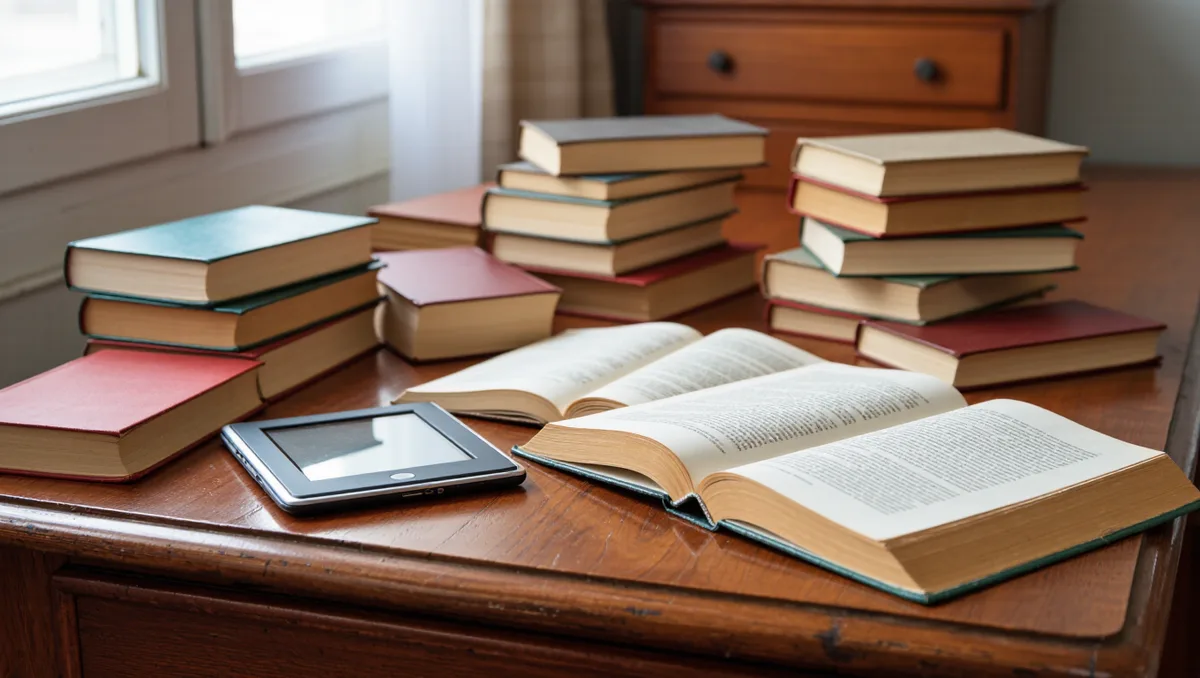
When the layout is the content. Print still accounts for the majority of U.S. trade book revenue, per the Association of American Publishers' 2024 StatShot reports — and no categories guard that share more fiercely than cookbooks, art books, and atlases, where the spread, the color, and the size are the product. Pixels are fine for prose. They are rude to risotto.
This is a live question in most households now, because everything else has gone digital and the cookbook shelf keeps not going anywhere. The pattern has a logic, and it applies far beyond recipes — anywhere a book is more than its words, paper still earns its keep.
Why Do Cookbooks Still Sell in Print?
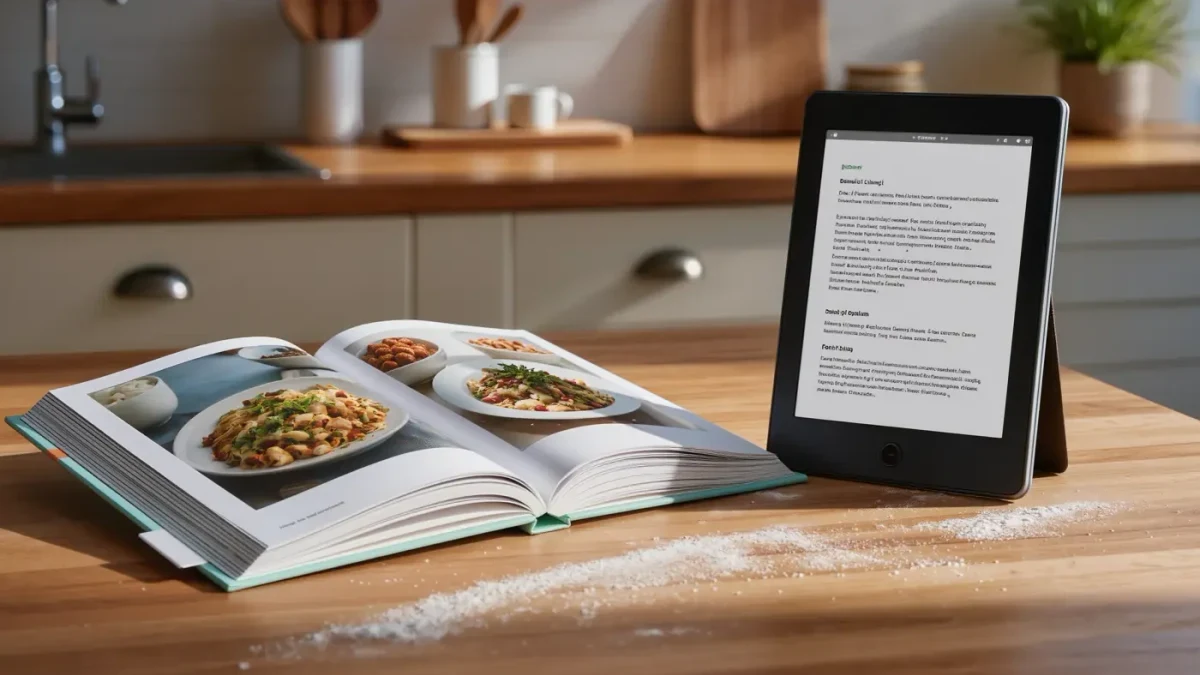
Because cooking is a hands-busy, counter-conditions activity that print serves better. An open book lies flat and stays put; an ingredient list is legible from arm's length while both hands are floured; and a splashed page dries out with a war story. A tablet does none of these things gracefully.
Watch someone actually cook from a book and the ergonomics become obvious. The book is propped against the backsplash, held open by a jar or a purpose-made stand; the cook glances, stirs, glances again. Page-flipping is one hundred percent reliable with wet hands, which is not a sentence anyone has said about a touchscreen. When the recipe says while the dough rests, the book waits without locking itself.
There is also the design argument: good cookbooks are engineered as spreads — ingredients on the left, method on the right, photograph across the gutter — and e-book reflow flattens that choreography into a scrolling strip. Publishers know it, which is why cookbook print sales have stayed strong even as other nonfiction went digital, a resilience the industry press, including The Associated Press's book coverage, has noted repeatedly in its seasonal retail reporting. The category simply behaves differently.
What About Art Books and Photobooks?
Resolution and fidelity. A well-printed art book delivers color proofed for the page at a density screens don't match, in spreads the size of a place setting, with no backlight between you and the brushwork. The book is the gallery. Screens are the postcard stand.
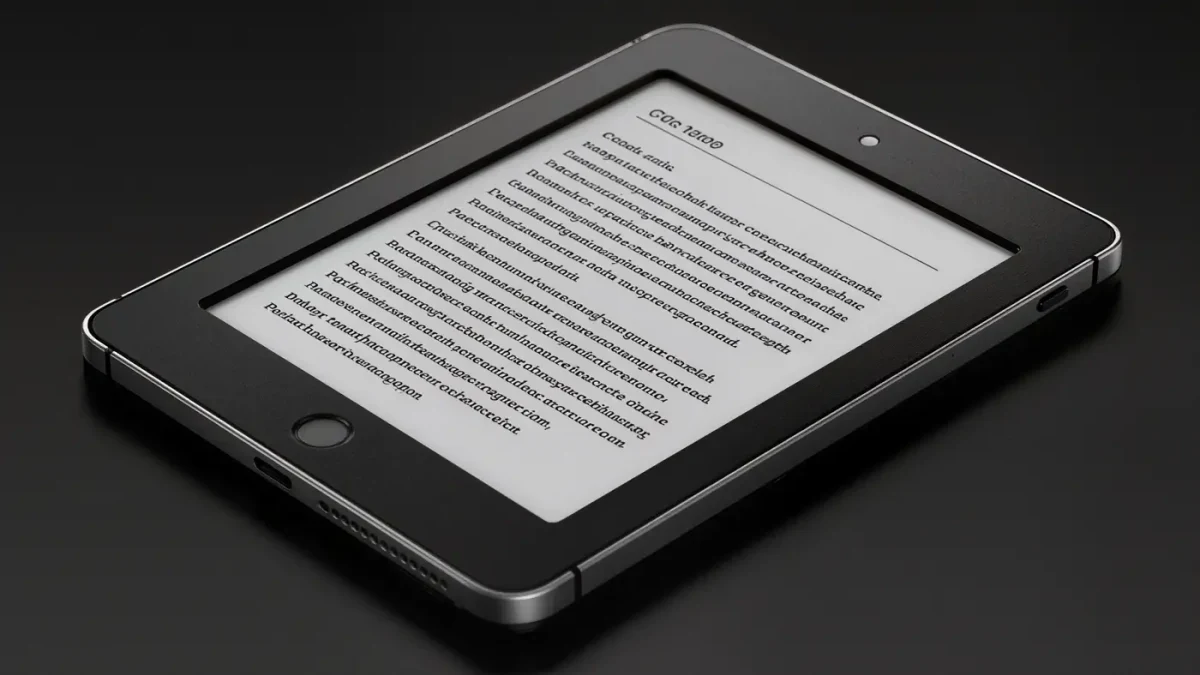
Digital art books do exist, and the honest accounting is harsher here than for cookbooks. Image-heavy e-book files are enormous, so stores compress them; compression and art are enemies. Fixed-layout files display the spread, but on a phone the plates shrink to postage stamps, and color varies with every screen's calibration and brightness. Zoom is real and occasionally wonderful — better than a loupe at a museum — but browsing, comparing two plates across pages, feeling the scale of a reproduction: print wins those exchanges without argument.
The collector's dimension matters too. Art books are bought as objects — for shelves, gifts, and eventual inheritance — and a license to view a file is a different purchase than a thing you own. Nobody displays an e-book on a coffee table. Well, nobody has yet.
Do Atlases and Reference Books Work Digitally?
Mixed, and honestly mixed. Zoomable digital maps beat print for detail — pinch in on a street, search a name, jump between scales in a second. But an atlas's core pleasure is the overview: the whole spread of the Aegean at once, adjacent regions in context, the shape of the world rather than one query at a time. Zoom answers questions. The spread asks them.
Reference books split along the same seam. Lookup-style reference — dictionaries, style manuals, field guides with search — moved to digital years ago and should stay there. Browse-style reference — big historical atlases, illustrated surveys, anything where adjacency is meaning — still belongs on paper. The rule of thumb: if you go to the book with a question, digital serves you; if you go to wander, print does.
When Is a Digital Cookbook Actually Better?
Search, portability, and updates. A digital library puts two hundred cookbooks in your pocket for a trip; search finds every use for that sad bunch of cilantro in ninety seconds; errata get fixed silently instead of becoming family lore about the salt.
Here is the honest scorecard:
| Aspect | Print cookbook | Digital cookbook |
|---|---|---|
| Layout and spreads | Designed for the gutter | Reflowed or shrunken |
| Kitchen conditions | Splash-tolerant | Splash-anxious |
| Finding a recipe | Index, with luck | Instant search |
| Shelf space | Consumes a shelf | Consumes nothing |
| Corrections | Never | Silently updated |
The workable truce most kitchens reach: buy the books you'll cook from weekly in print, and keep the digital editions for search, travel, and recipe hoarding. It isn't indecision. It's matching the format to the failure mode.
Frequently Asked Questions About Print Versus Digital
Are e-cookbooks ever the right choice?
Yes — for travelers, small kitchens, and recipe collectors who search more than they browse. If your cooking style is what can I make with what's here, instant search across a large collection beats a shelf every time. The format is wrong for the counter; it is right for the plan.
Why do art e-books cost as much as the print ones?
Image licensing and file production. Rights for reproductions are often priced per edition regardless of format, and large, properly color-managed image files are expensive to prepare and host. The savings from skipping printing rarely reach the cover price. You are buying the pictures, either way.
Do tablets solve the art-book problem with zoom?
Partly, and it's a genuine gain — no print book lets you magnify a brushstroke. But zoom trades overview for detail, and color remains screen-relative rather than proofed. Tablets make excellent second opinions and mediocre first collections. Own the book, keep the tablet for the loupe work.
Should I rebuy my print cookbooks digitally?
Generally no. Rebuy selectively: the two or three books you actually cook from gain the most from search and travel copies. The rest were purchases of design and identity as much as recipes, and they were already complete when you bought them. Print keeps its half of the truce.